
- Home Page
- Accepted
Paintings & Copies - Doubtful
Attributions - Doubtful Textual References
- Alternative
Titles - Collectors &
Museums - Bibliography
- Search Abecedario
- Watteau &
His Circle
Paravent Blondel de Gagny (copy 1)
Entered April 2026
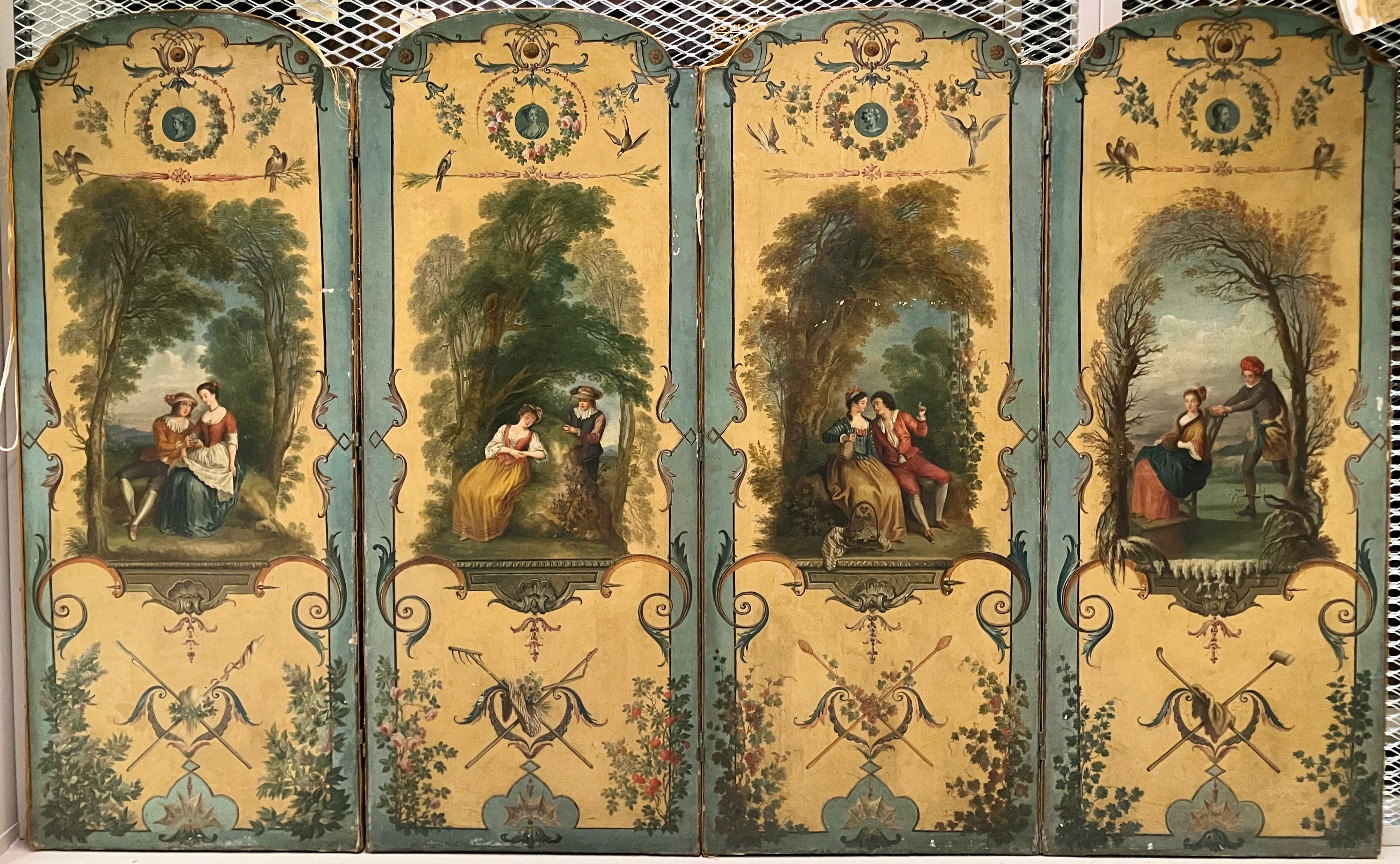
New York, Metropolitan Museum of Art, inv. 26.260.22
Oil on canvas, wooden frame
139.7 × 223.5 cm (overall)
ALTERNATIVE TITLES
Paravent de quatre feuilles
PROVENANCE
Sale, Paris, Lemaitre-Laguettrie, March 30, 1840, lot 5: “WATTEAU (Antoine). Un magnifique Paravent de quatre feuilles, représentant les quatre Saisons entourées de guirlandes de fleurs et d'épis. Morceau digne de fixer l'attention des amateurs.”
Paris, collection of Adolphe Dugléré (1805-1884; chef). Paris, his sale, Ridel, January 31, 1853, lot 97: “WATTEAU (Ant.) — Beau paravent composé de quatre feuilles. Il a appartenu à Mme Dubarry. Les ornements et les arabesques sont d’une grande finesse d'exécution. Gravé.” Sold for 3,005 Francs to Latapie.
Paris and Brunoy, collection of Fernandos (1833-1904) and Josepha Gutierrez de Estrada (1836-1924). His posthumous sale, Paris, April 28, 1905, lot 222: “WATTEAU (D’après). Paravent à quatre feuilles. Il représente les Quatre Saisons, figurées par des groupes allégoriques et entourés d’arabesques, de médailles, de trophées et de guirlandes de fleurs. Ces quatre compositions ont été gravées par Boucher, d’après Watteau. Chaque feuille mésure: Haut. 1m 40; larg. 56 cent. Catalogue de l’Art français sous Louis XIV et sous Louis XV [1888], n. 156."
New York and Hewlett, Long Island, collection of John Innes Kane and Annie C. Kane (1857-1926). Bequeathed by the latter to the Metropolitan Museum of Art in 1926.
EXIBITIONS
Paris, Exposition de l'art français sous Louis XIV et Louis XV (1888), cat. 156 (as Watteau, Paravent de quatre feuilles, lent by Mme Gutierrez de Estrada).
SELECT BIBLIOGRAPHY
Monselet, Chanvallon. Histoire d'un souffleur (1872), 88-90.
REMARKS
The attribution of this screen was subject to several major changes in the nineteenth and twentieth centuries. Most of the time it was claimed to be from Watteau’s own hand. When it came up for auction in 1840 it was even claimed to have been in the collection of Madame du Barry, a type of baseless claim often made for eighteenth-century pictures. When it entered the collection of the Metropolitan Museum in 1926 it still bore an ascription to Watteau himself, but this claim was subsequently modified to “copy after Watteau.” As part of this debasement, it was reclassified, and moved from the painting department to the decorative arts department. The leaves of the screen were separated, and one of them was displayed alone as a decorative backdrop in a hall with rococo decorative arts.
Until the present, this screen’s provenance in the nineteenth century was not known. We have spliced together several refences to its appearance on the art market, though in no instance did any reference cite the others. However, the rarity of such full screens, the occasional measurements, and the similarities of the descriptions help identify it.
 |
Paravent Blondel de Gagny: Le Printemps (copy 2)
Entered April 2026
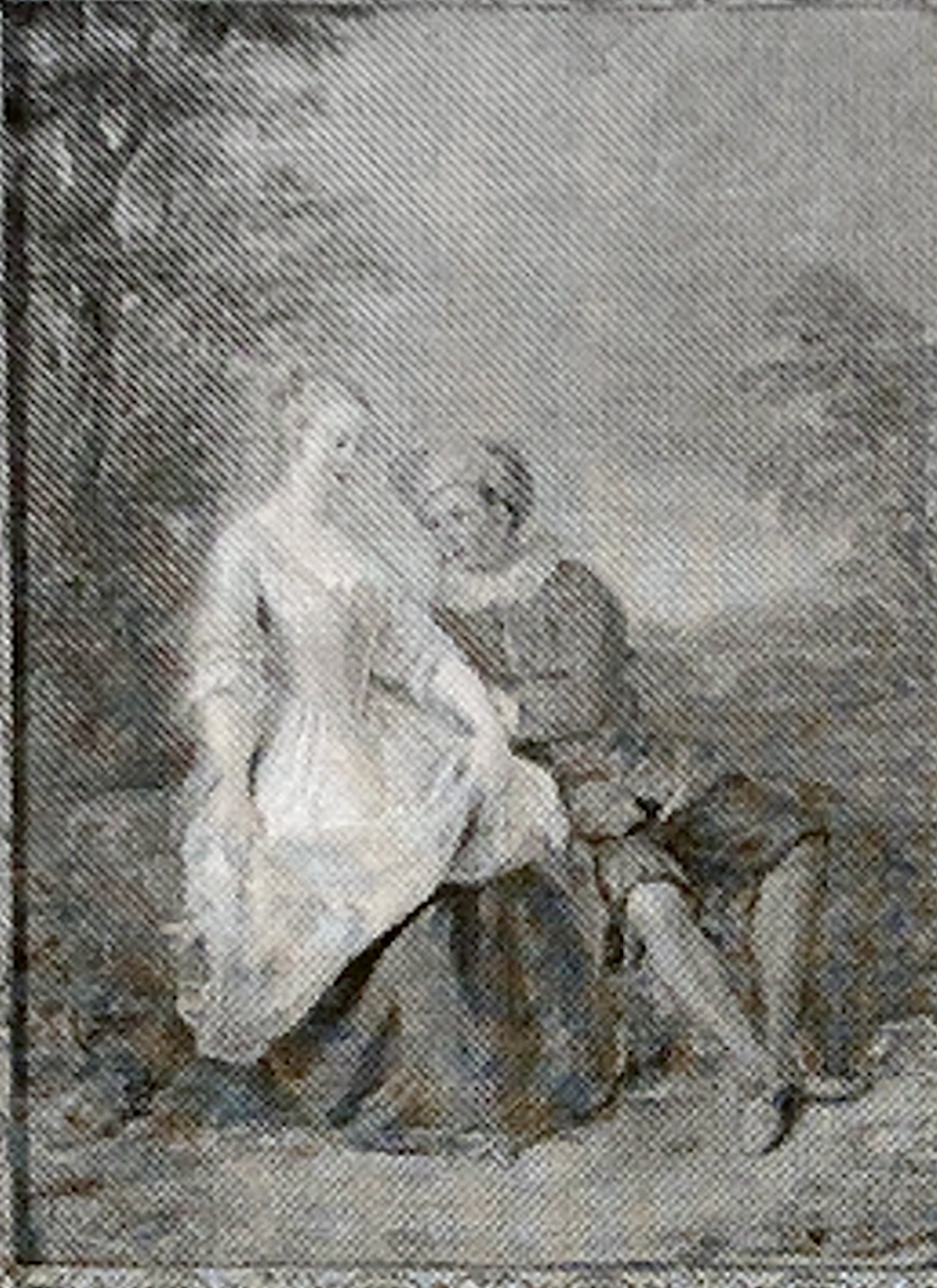
Whereabouts unknown
Oil on canvas
31 × 23.9 cm
ALTERNATIVE TITLES
Galante Szene in einem Park
PROVENANCE
Vienna, sale, Dorotheum, April 13, 2011, lot 707: “Attributed to Jean-Baptiste Pater. Galante Szene in einem Park. Öl auf Leinwand, 31 x 23,9 cm, in einem originalen geschnitzten Louis XV. Rahmen. Height 31 cm.; Width 23.9 cm.” Bought in.
REMARKS
Attributions to Watteau’s pupil, Jean-Baptiste Pater, are one way that auction houses have designated Watteau-like paintings. However, Pater had a distinctive manner of painting, and that is not present here.
|
Paravent Blondel de Gagny: Le Printemps and L’Eté (copy 3)
Entered April 2026
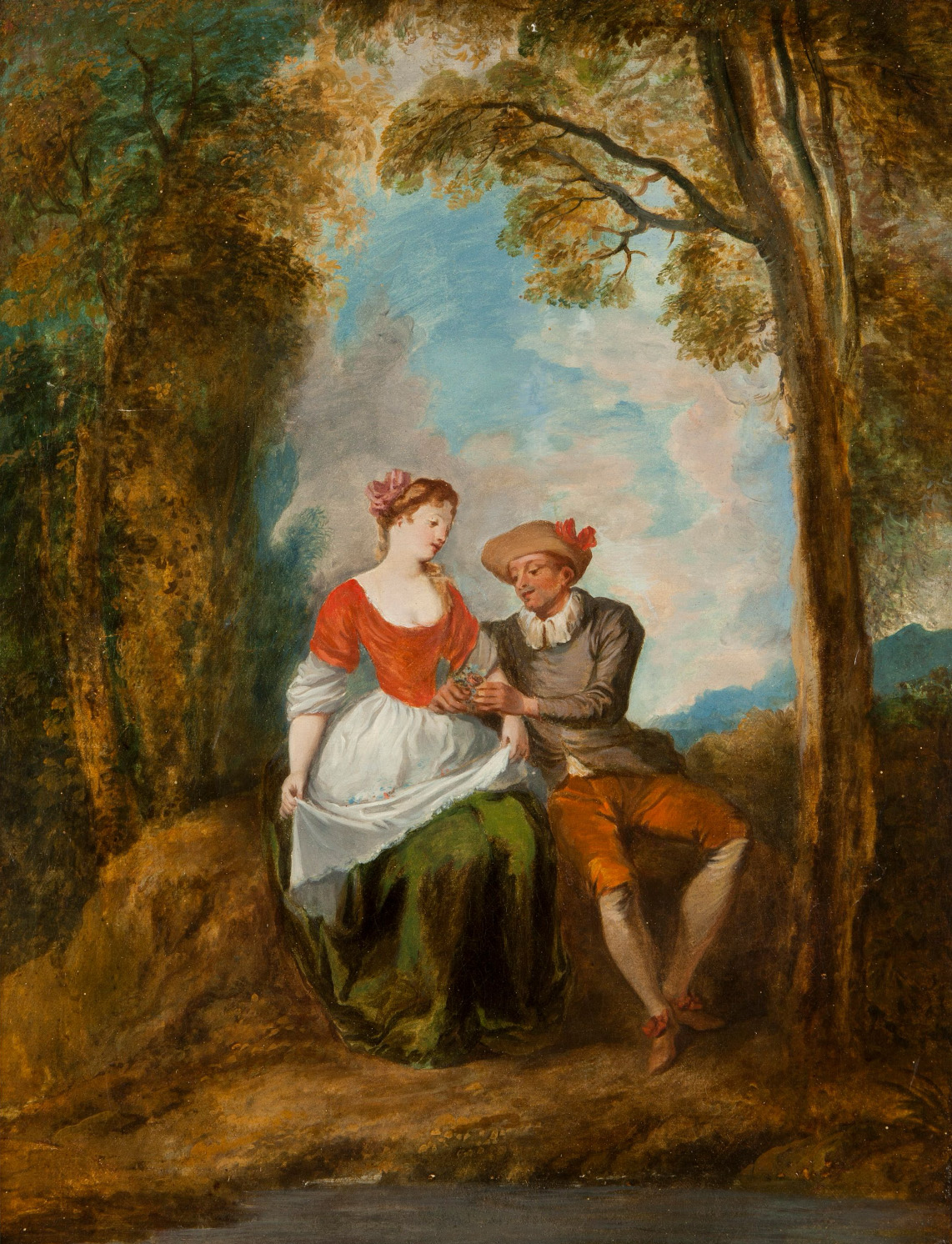
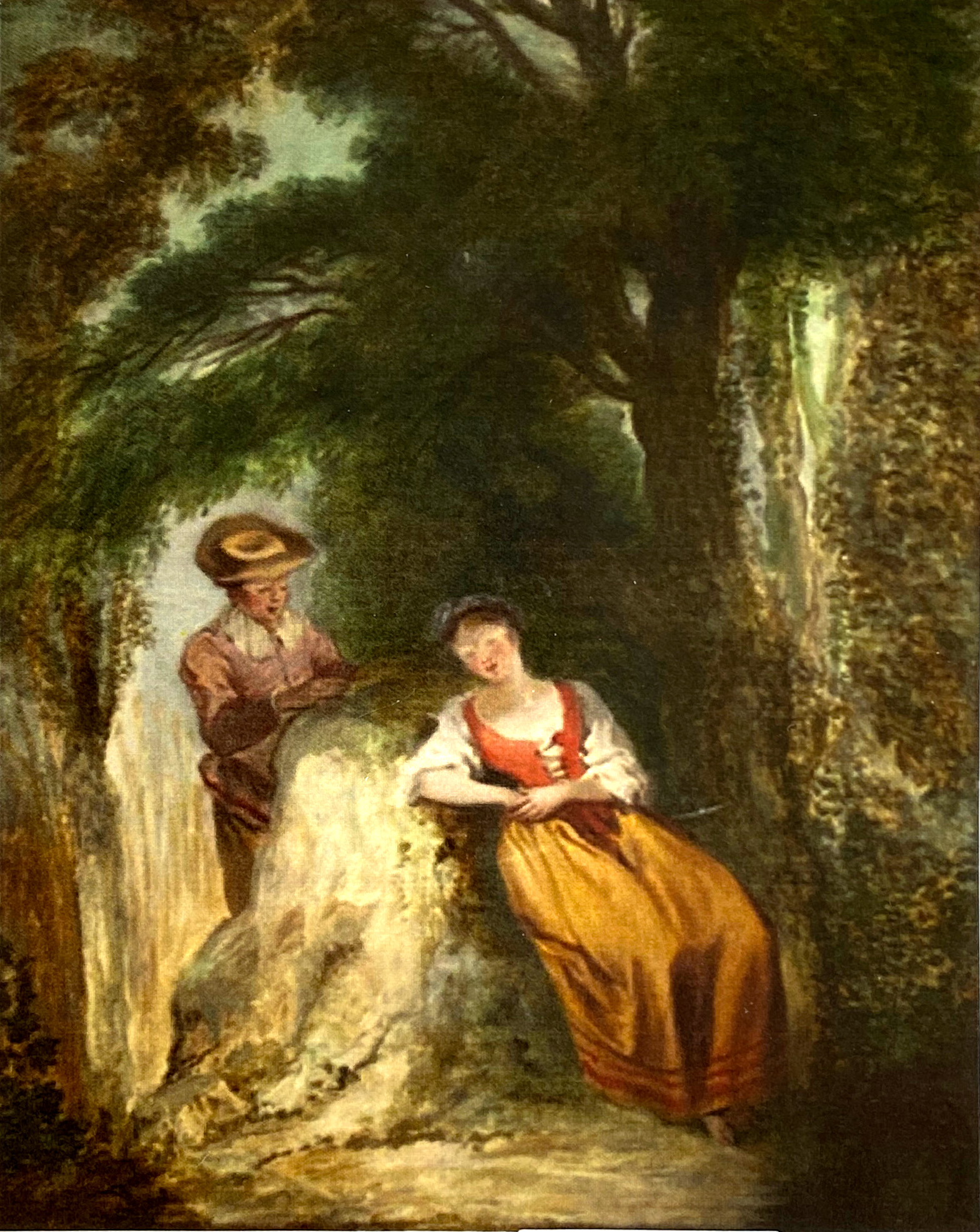
Whereabouts unknown
Oil on canvas
62.2 × 48.2 cm (each)
ALTERNATE TITLES
A Girl Asleep
The Young Lovers
PROVENANCE
San Francisco, “luxury hotel.” Sale, San Francisco, Bonhams, August 25, 2013, lot 3011: “Manner of Jean Antoine Watteau. A girl asleep; The young lovers (a pair) 24 1/2 x 19in”.
REMARKS
Although presented as paintings “in the manner of Watteau,” these pendants more properly should have been recognized as straightforward copies after two leaves of the Blondel de Gagny paravent. As can be seen, their left-right orientation indicates they were based on the engravings in the Oeuvre gravé.
|
For Paravent Blondel de Gagny CLICK HERE